
CRBN is a Southern California pickleball company founded by Garrett Gosselin and Kyle Goguen after Gosselin began developing carbon-fiber paddles in 2020. Its current range spans full-foam TruFoam paddles, the firmer X Series and the original control-oriented Classic Series.
Current Pickleball3 coverage
The review cards at the top of this page contain Pickleball3’s published CRBN paddle reviews. Each full review identifies the exact line, shape, thickness and generation; separates official specifications from measured values; explains power, control, spin, sweet spot, stability and hand speed; and connects the final score to the player who will actually benefit.
A missing model is not a negative verdict. It means that Pickleball3 has not yet completed or published that exact-variant review under the same methodology.
This page covers CRBN Pickleball, not unrelated companies that use the CRBN name in paintball or other industries. Use this brand guide to understand CRBN’s history, recurring shape system, construction families, warranty and the practical differences between Genesis, Waves, Barrage, X and Classic. Use the model reviews for exact specifications, scores and buying decisions.
The key point is simple: CRBN¹, CRBN², CRBN³ and CRBN⁴ describe shapes, not performance tiers. A CRBN² Genesis and CRBN² Barrage share a broad outline, but their cores, response and ideal players are different. The series name and exact variant matter as much as the number.
Showing 23 of 23 paddles
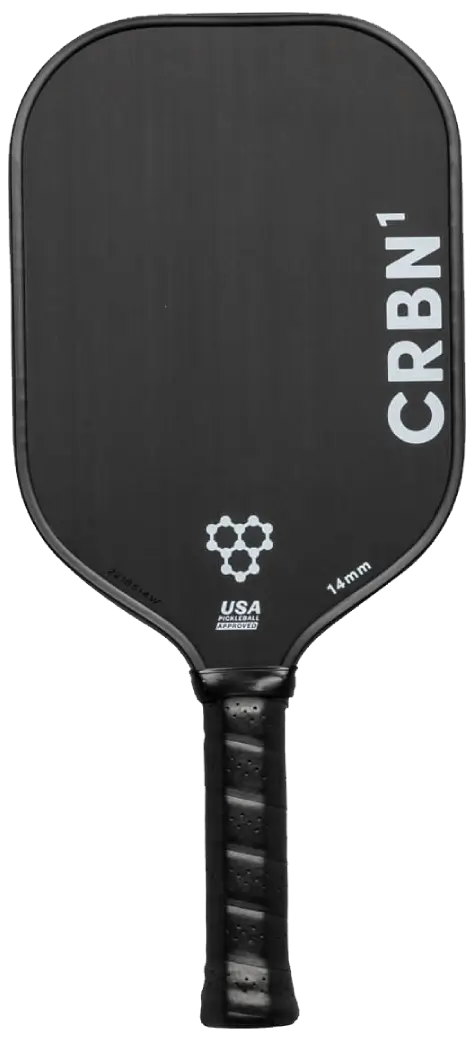
CRBN
CRBN¹ Classic Series 14mm
 Control7.5/10
 Power7.0/10
 Spin8.5/10
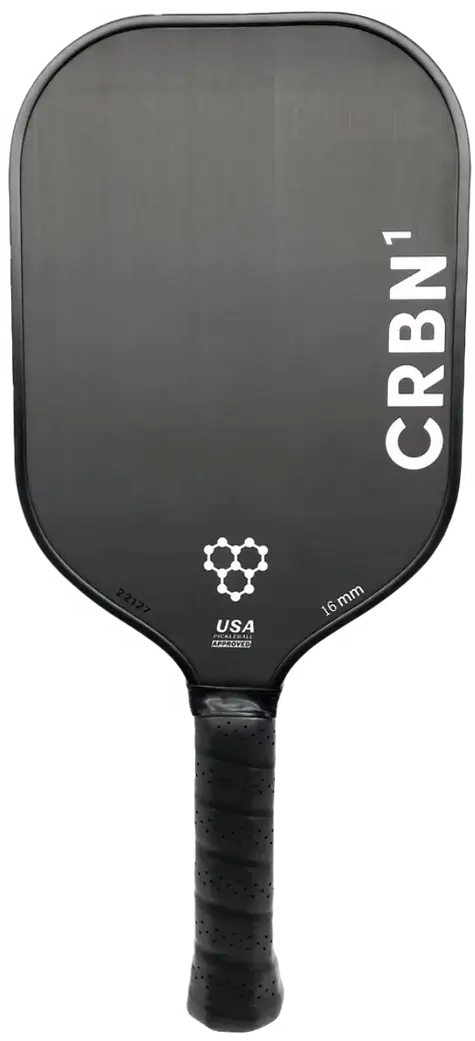
CRBN
CRBN¹ Classic Series 16mm
Control9.0/10Power6.0/10Spin8.5/10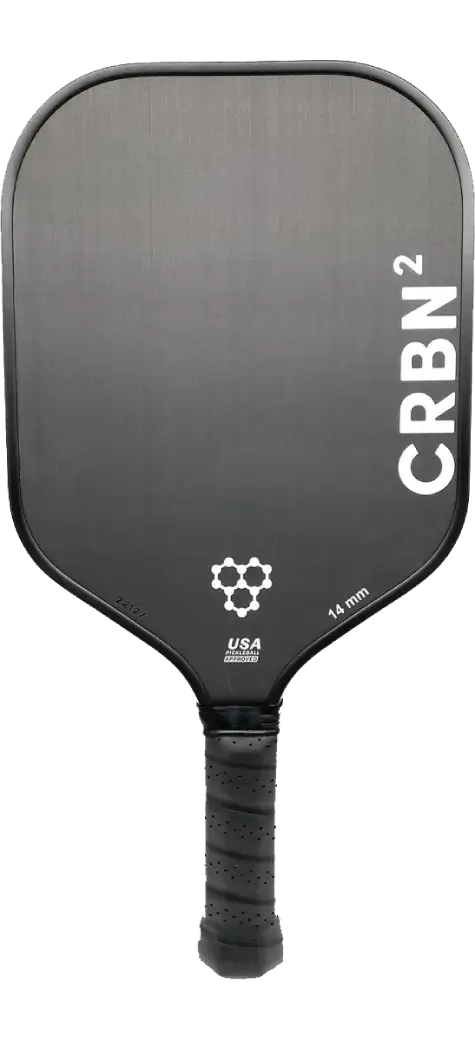
CRBN
CRBN² Classic Series 14mm
Control8.0/10Power7.0/10Spin8.5/10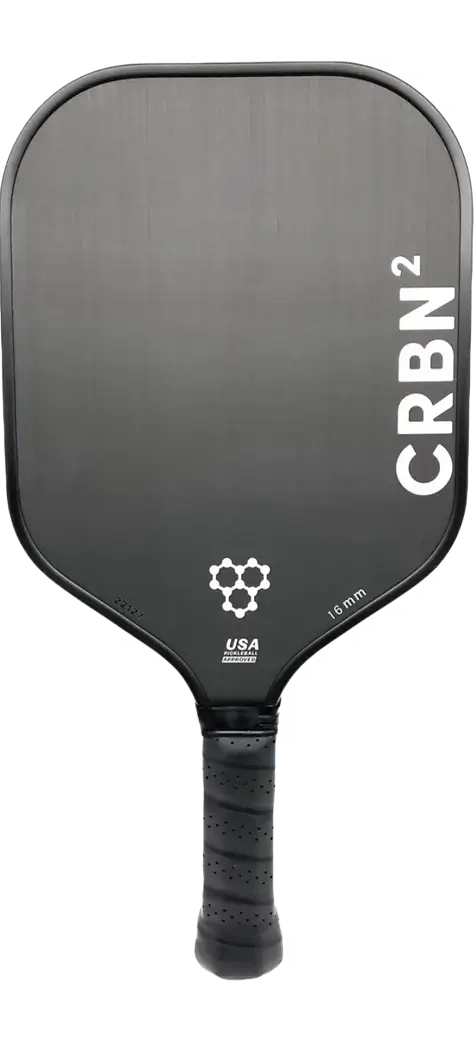
CRBN
CRBN² Classic Series 16mm
Control9.0/10Power5.5/10Spin8.5/10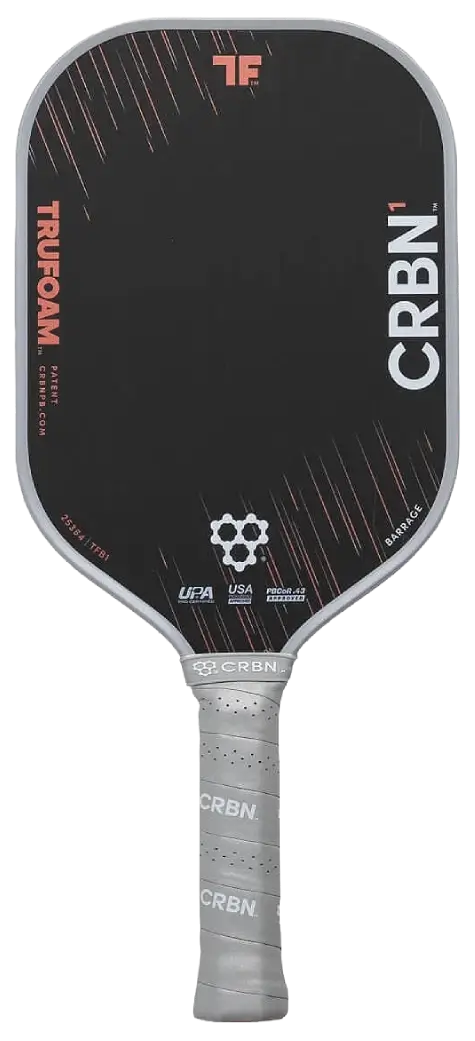
CRBN
CRBN¹ TruFoam Barrage 14 mm
Control7.5/10Power8.5/10Spin8.5/10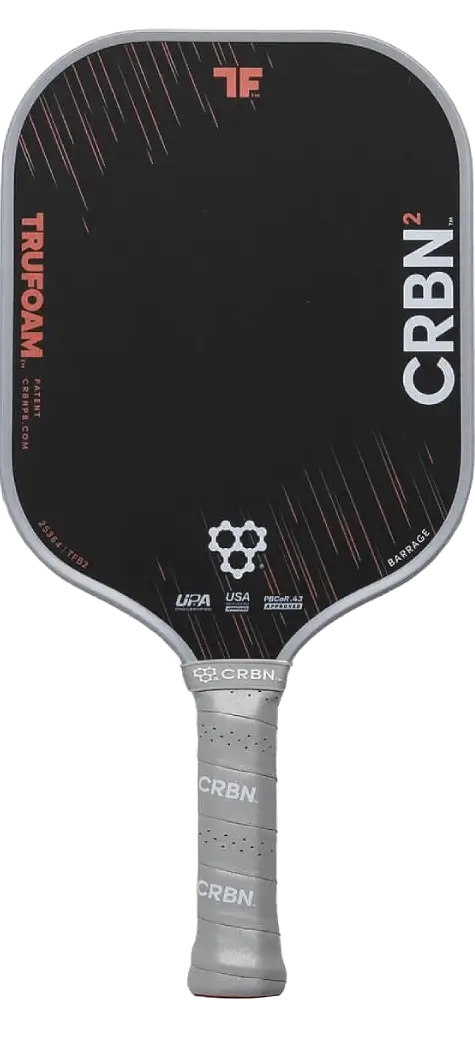
CRBN
CRBN² TruFoam Barrage 14 mm
Control8.0/10Power8.5/10Spin9.5/10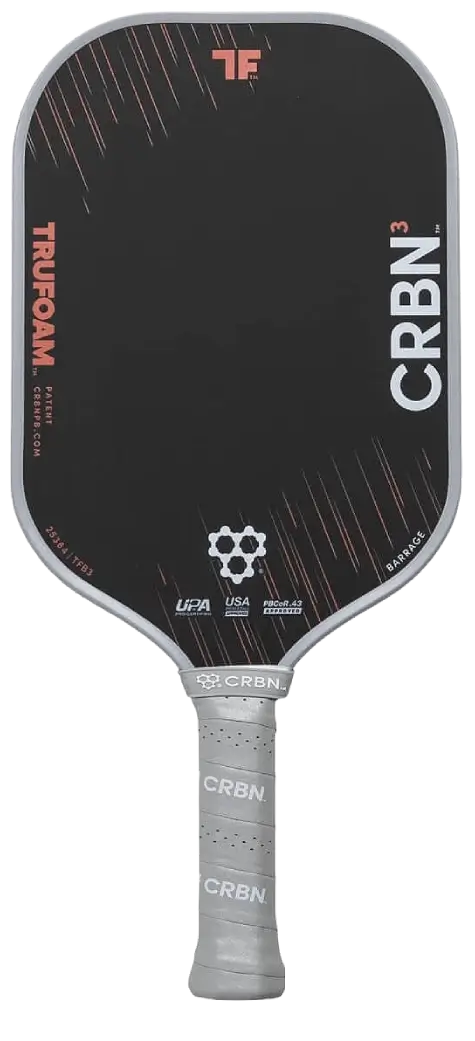
CRBN
CRBN³ TruFoam Barrage 14 mm
Control7.5/10Power8.5/10Spin8.5/10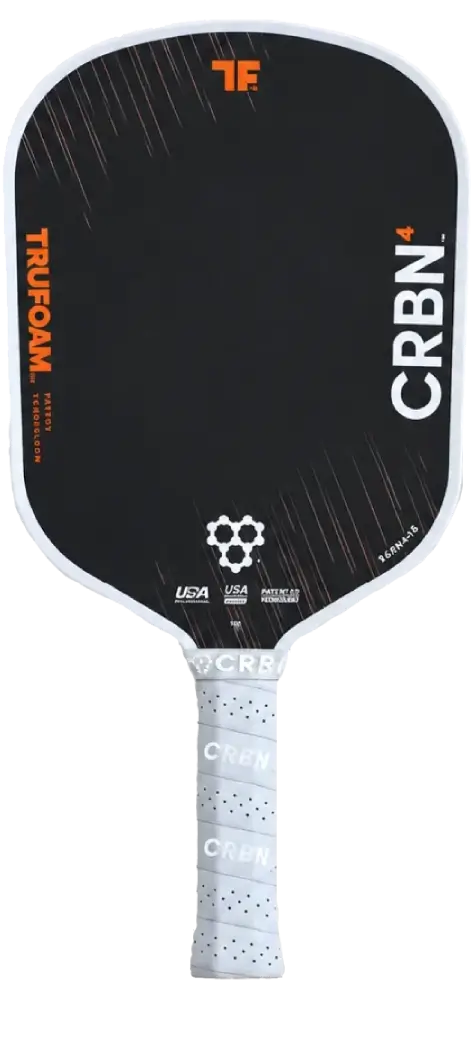
CRBN
CRBN⁴ TruFoam Barrage 14 mm
Control8.0/10Power8.5/10Spin9.5/10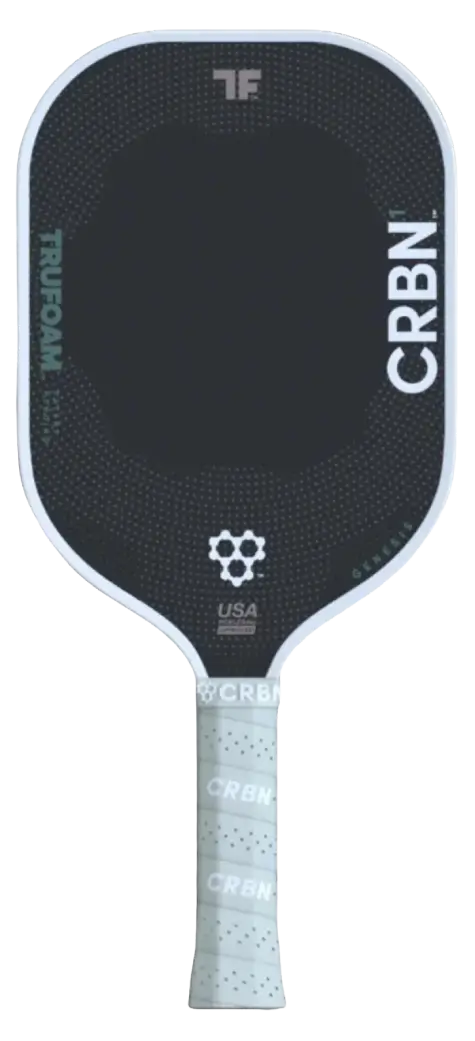
CRBN
CRBN¹ TruFoam Genesis 14 mm
Control7.5/10Power8.0/10Spin9.0/10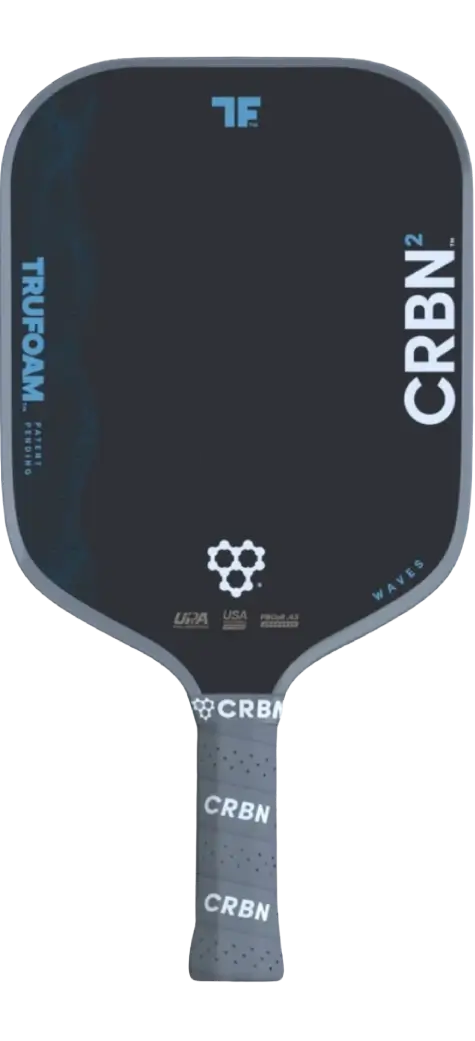
CRBN
CRBN² TruFoam Genesis 14 mm
Control8.5/10Power8.0/10Spin9.0/10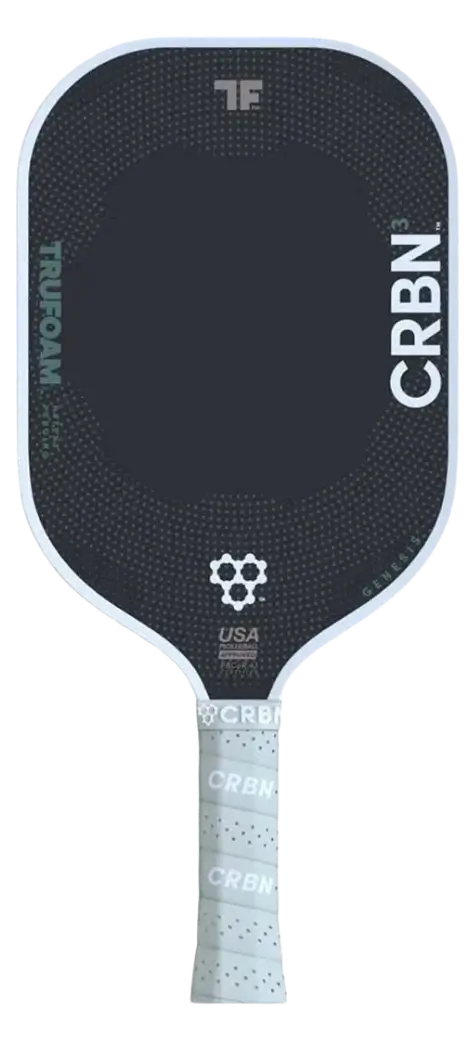
CRBN
CRBN³ TruFoam Genesis 14 mm
Control7.5/10Power8.0/10Spin9.5/10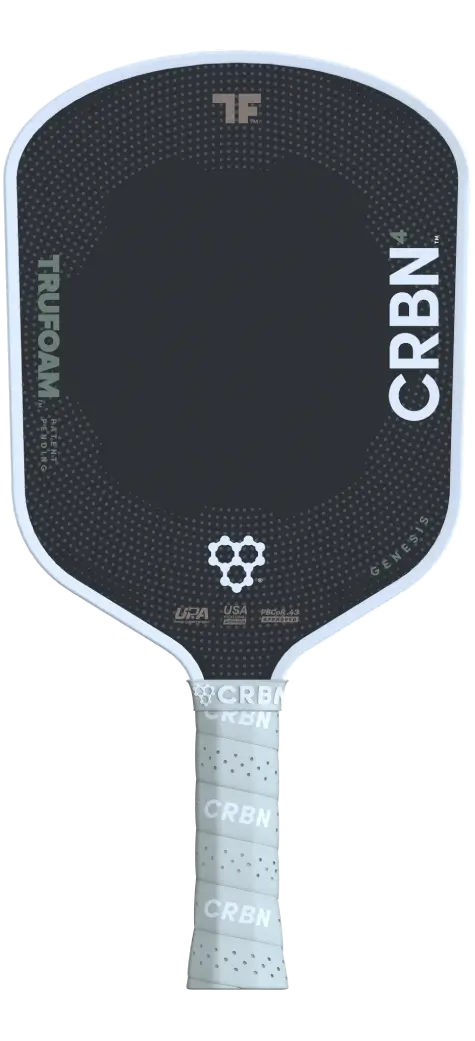
CRBN
CRBN⁴ TruFoam Genesis 14 mm
Control8.5/10Power7.5/10Spin9.0/10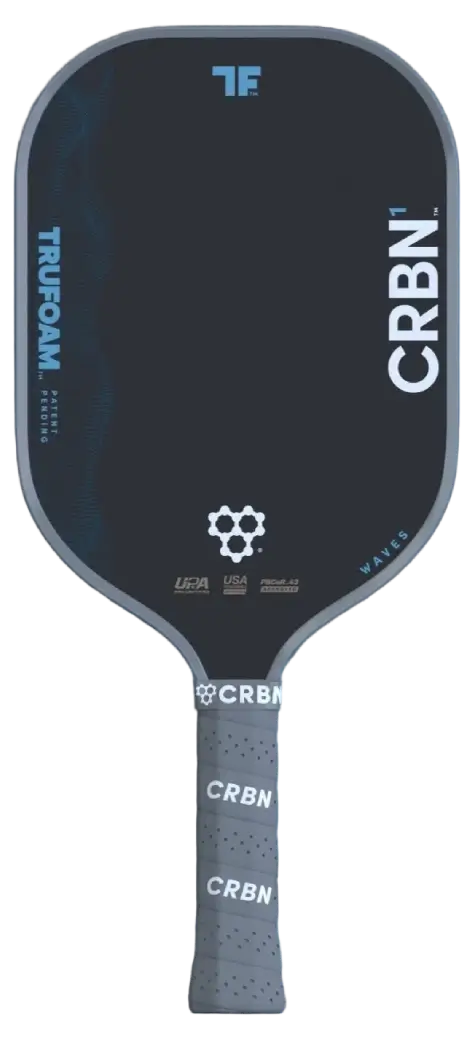
CRBN
CRBN¹ TruFoam Waves
Control7.0/10Power8.5/10Spin9.0/10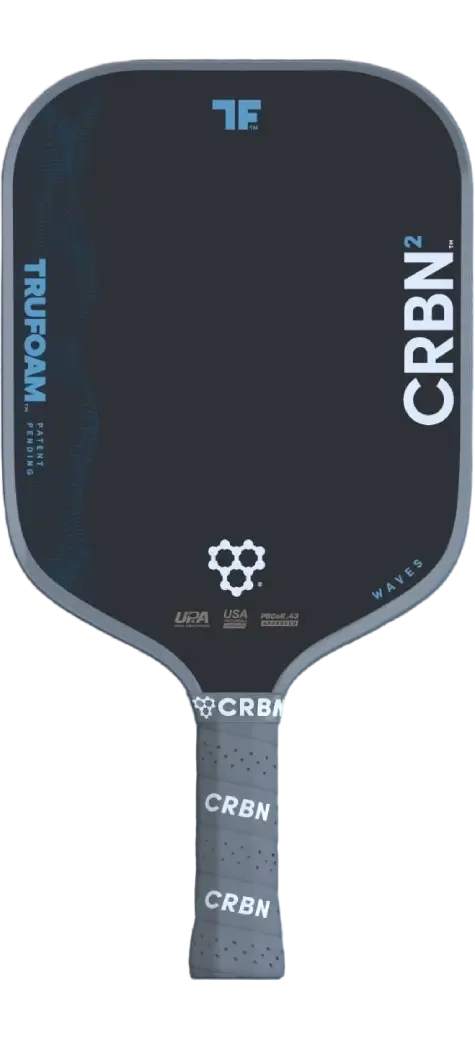
CRBN
CRBN² TruFoam Waves
Control8.5/10Power8.5/10Spin9.5/10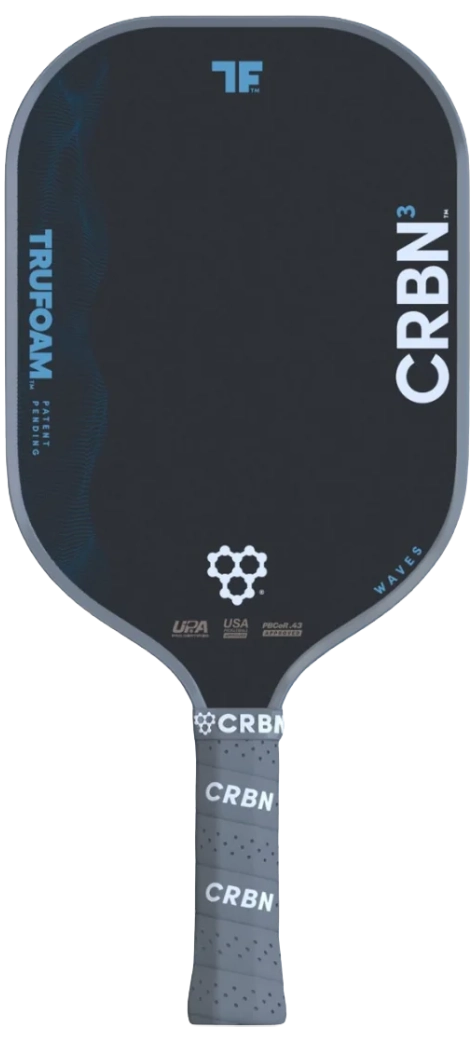
CRBN
CRBN³ TruFoam Waves
Control7.5/10Power8.5/10Spin9.5/10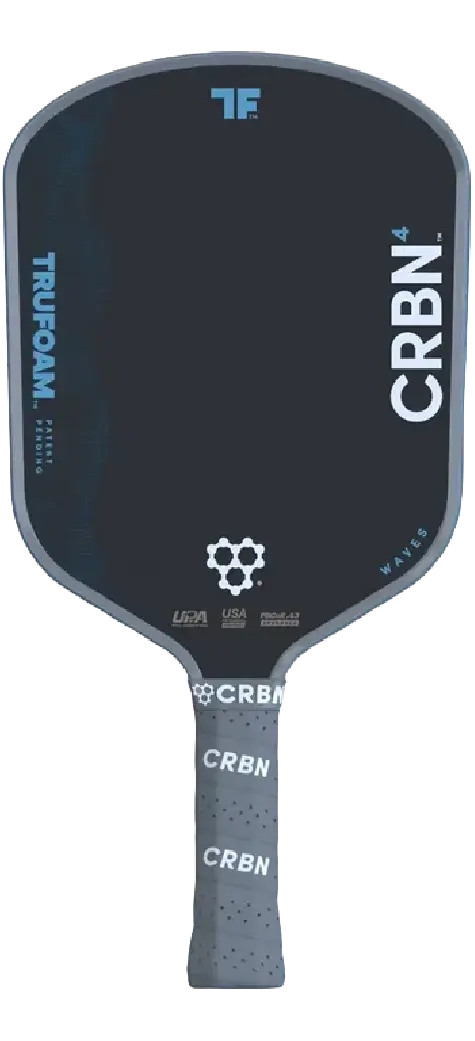
CRBN
CRBN⁴ TruFoam Waves
Control8.5/10Power8.5/10Spin9.0/10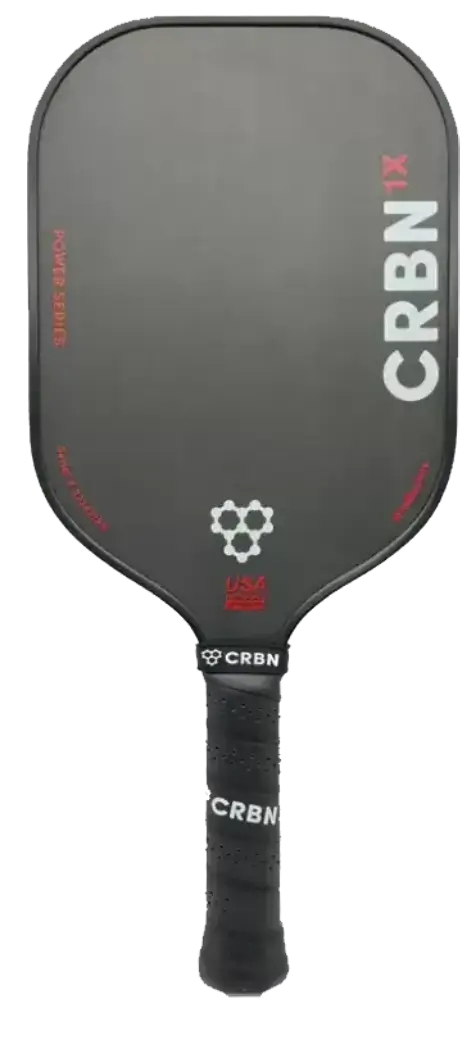
CRBN
CRBN¹ X Series 12mm Thomas Wilson Signature
Control6.0/10Power9.5/10Spin9.0/10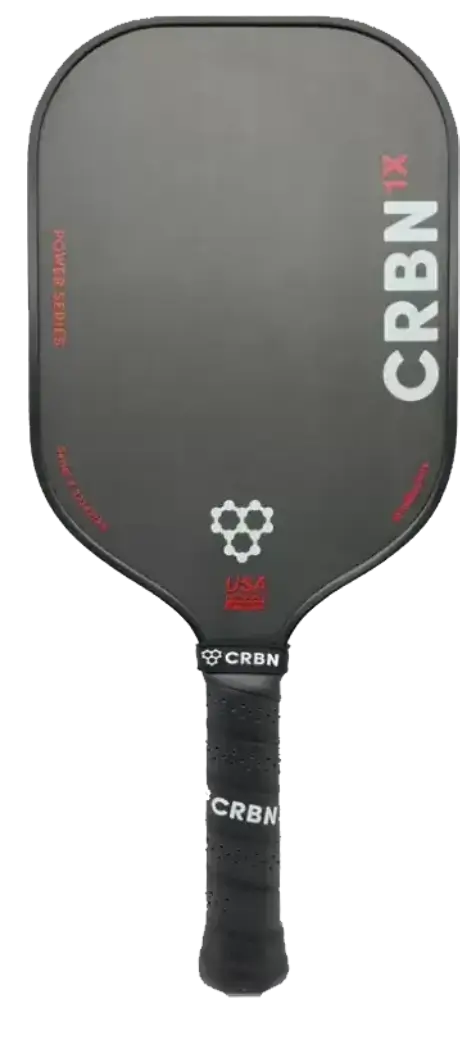
CRBN
CRBN¹ X Series 14mm
Control6.0/10Power9.0/10Spin9.5/10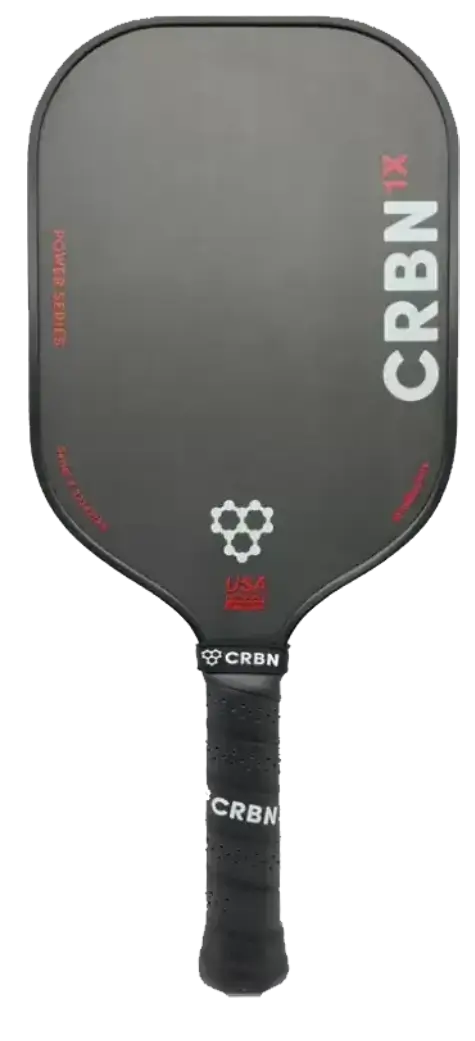
CRBN
CRBN¹ X Series 16mm
Control8.0/10Power8.5/10Spin9.0/10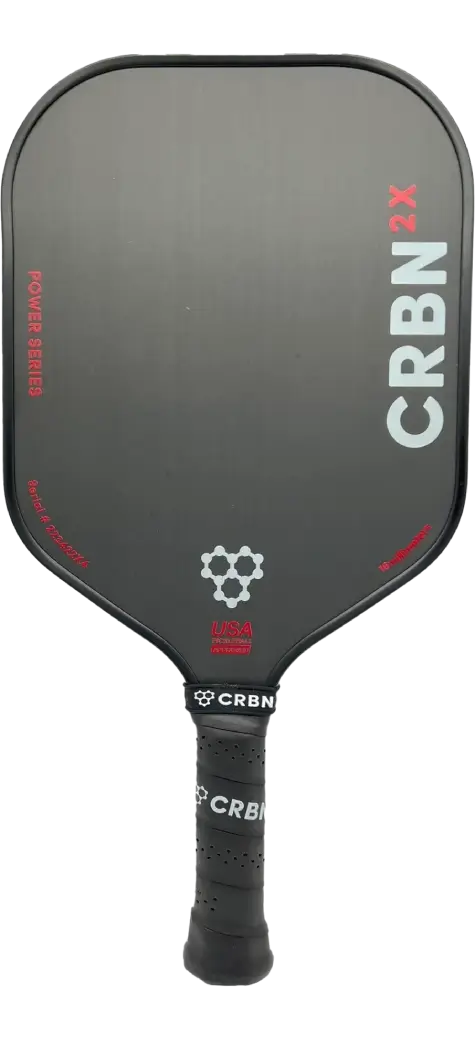
CRBN
CRBN² X Series 14mm
Control9.0/10Power7.5/10Spin9.0/10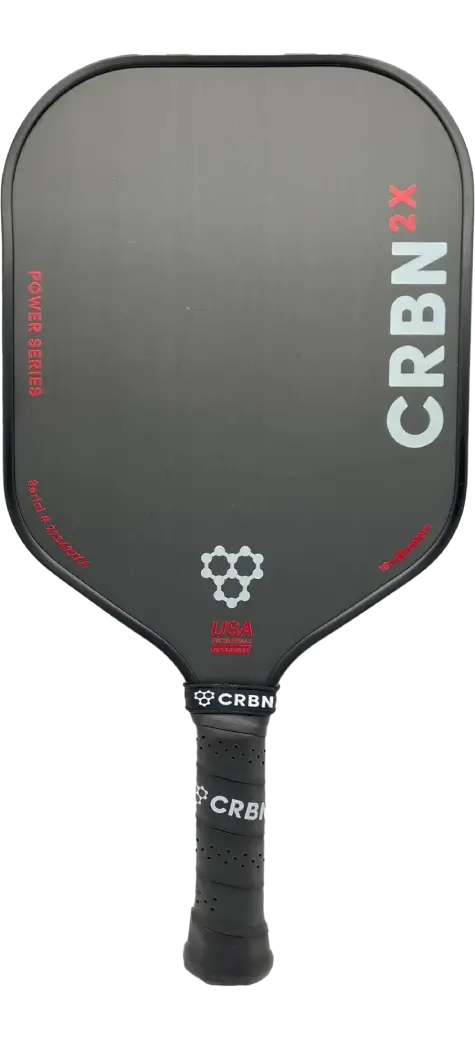
CRBN
CRBN² X Series 16mm
Control8.5/10Power7.5/10Spin8.5/10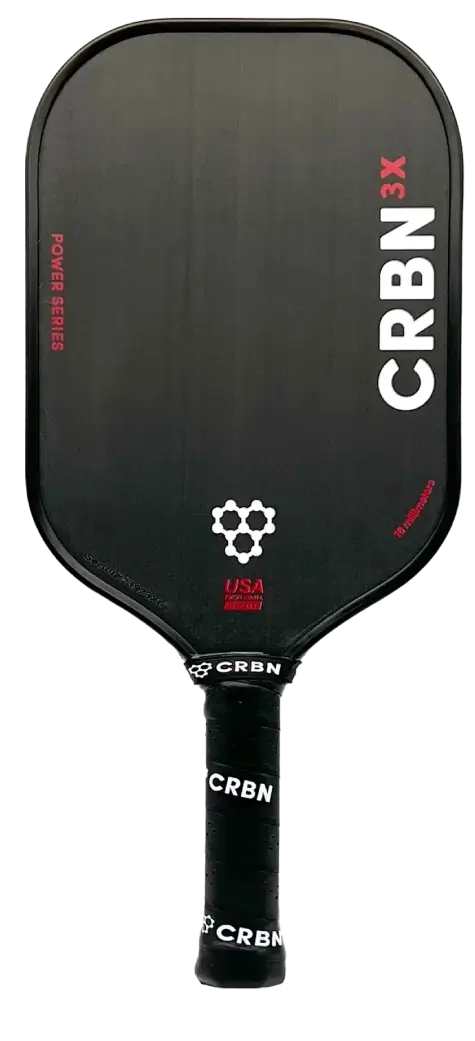
CRBN
CRBN³ X Series 14mm
Control7.5/10Power8.0/10Spin9.0/10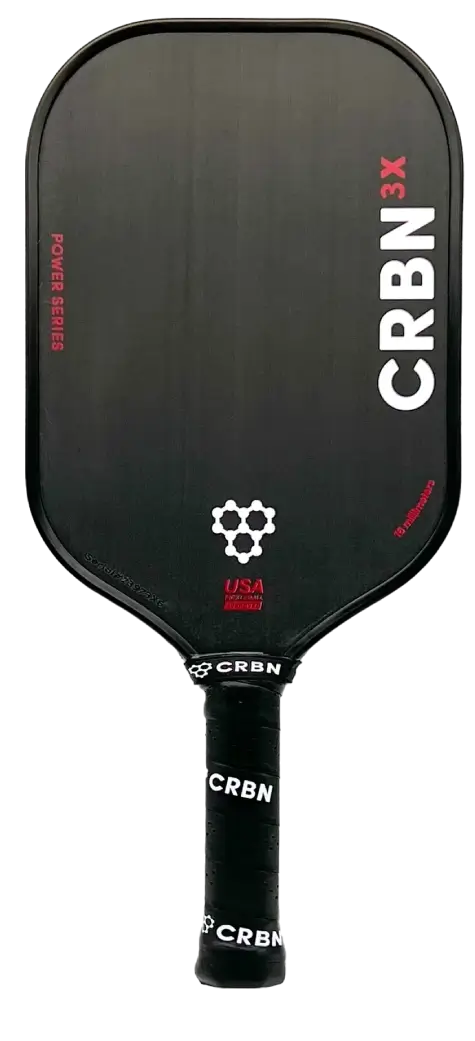
CRBN
CRBN³ X Series 16mm
Control8.0/10Power8.0/10Spin9.0/10No paddles match these filters.
CRBN at a glance
| Brand fact | Answer |
|---|---|
| Development began | 2020 |
| Commercial launch | Fall 2021 |
| Founders | Garrett Gosselin and Kyle Goguen |
| Based in | Costa Mesa, Southern California, United States |
| Product development | In-house prototyping and machine-shop work in Southern California |
| Primary business | Pickleball paddles, eyewear, bags, apparel, balls and accessories |
| Current main paddle families | TruFoam Barrage, TruFoam Waves, TruFoam Genesis, X Series and Classic Series |
| Recurring shapes | CRBN¹ long-handle elongated, CRBN² square, CRBN³ elongated and CRBN⁴ hybrid AeroCurve |
| Flagship US price | $279.99 for current TruFoam models when checked on 2026-07-22 |
| Standard paddle warranty | One-year limited warranty for registered products, with regional and purchase conditions |
| Best known for | Minimalist carbon-fiber paddles, strong spin potential and an early move into full-foam cores |
What is CRBN Pickleball?
CRBN began as a player-led product project rather than a broad sporting-goods company. Garrett Gosselin lost his hospitality job during the COVID-19 disruption, played pickleball heavily and became dissatisfied with the paddles available to him. He wanted a cleaner-looking carbon-fiber face, an elongated shape and a response suited to competitive play. Early prototypes attracted interest at local courts, and the first commercial batch followed in 2021.
Gosselin partnered with childhood friend Kyle Goguen, whose background covered engineering, e-commerce and operations. That combination shaped the company’s identity: CRBN has generally presented fewer visual distractions than many competitors and has concentrated on construction, surface response and repeatable shape names.
The company has since expanded beyond paddles, but paddles remain the core of the brand. CRBN’s most important contribution is not one universal “CRBN feel.” It is the progression from raw-carbon honeycomb paddles to reinforced X Series models and then to three deliberately different full-foam responses.
CRBN history: rapid growth, a compliance crisis and a full-foam reset
2020–2021: prototypes become a commercial brand
Gosselin began developing paddles in 2020. The initial concept paired a restrained black design with a carbon-fiber face and an elongated outline. In fall 2021, CRBN launched commercially with a first batch of 500 paddles; demand quickly exceeded that small opening inventory.
The original products later became known as the Classic Series. Their raw T700 carbon-fiber faces and polypropylene honeycomb cores helped establish the brand around spin, touch and a minimalist look at a time when raw-carbon paddles were less common than they are now.
2022: USA Pickleball removes and then reapproves new production
On April 29, 2022, USA Pickleball removed CRBN paddles from its approved list after commercially available samples failed surface-roughness requirements. CRBN said the problem appeared to be concentrated in a small portion of a third production run, but the removal initially applied across the brand’s approved paddles.
New production was added back to the approved list in May 2022 and identified by a laser-etched serial code. The episode matters because it demonstrates why tournament legality must be checked by exact model and production identity, not inferred from the logo. It also pushed CRBN toward stronger lot traceability and quality-control language.
From Classic to X Series
CRBN followed the softer original line with the X Series, formerly called the Power Series. It retained the familiar shapes but added reinforced edges and handle construction plus a stiffer, heat-sealed carbon structure. The practical result is a crisper, more powerful response than Classic, with less margin in the soft game.
The X Series was an important step because it gave CRBN a genuine power line without abandoning the shape system that players already understood. It is now the lower-priced performance option when discounted, but its polypropylene honeycomb response is firmer and less muted than TruFoam.
TruFoam: three foam cores instead of one flagship feel
CRBN’s current premium range is built around 14 mm full-foam paddles. Genesis, Waves and Barrage are not simple cosmetic variations. They use different foam-core architectures and target different ways of producing pace.
The full-foam approach removes the polypropylene honeycomb that can develop core crush or delamination in some thermoformed paddles. That is a meaningful construction change, but it is not a blanket durability guarantee. Surface wear, edge-guard problems, rattles and unit-to-unit variation can still occur.
How CRBN organizes its current paddle lineup
The easiest way to read CRBN’s catalogue is to choose the construction family first and the shape second. Do not start with the highest price or assume that CRBN⁴ is newer or better than CRBN¹.
Classic Series: softer, control-oriented honeycomb paddles
Classic is the renamed original CRBN line. It uses a raw T700 carbon-fiber face over a polypropylene honeycomb core and is aimed at players who prioritize dinks, drops, resets and a softer response over maximum pop.
Classic remains relevant for players who prefer a conventional raw-carbon feel and do not need the hottest construction. Its limitations are age and availability: the line is no longer the center of CRBN’s development, and the CRBN¹ and CRBN² listings were sold out at $179.99 when checked on 2026-07-22.
X Series: crisp power and better sale-price value
X Series uses the same core shape logic as Classic but adds a more rigid, reinforced build. It produces easier pace and faster rebound, making it better suited to drives, counters and players who want a direct impact response.
At the July 2026 US check, X Series paddles were listed at $169.99, reduced from $229.99. At that price, X can be the rational CRBN choice for a player who prefers a crisp honeycomb paddle and does not specifically want full-foam feel. The trade-off is that it lacks the muted dwell and core consistency that define TruFoam.
TruFoam Genesis: the most accessible all-court family
Genesis is the safest starting point in the current premium range. CRBN positions it around versatility, softer feel and precision; in practice, it is also the TruFoam family most consistently associated with a usable sweet spot and calmer resets.
Genesis still varies substantially by shape. The square CRBN² and hybrid CRBN⁴ are generally easier to manage than the long CRBN¹ or heavier-swinging CRBN³. Clean center contact can produce more rebound than the muted feel initially suggests, so Genesis is not a purely defensive control paddle. It is an all-court line with a control bias.
TruFoam Waves: high spin and dwell, but the hardest value case
Waves is built around longer dwell and drive-based power. It can generate excellent spin, and several measured examples sit near the top of the CRBN range. That headline does not tell the whole story.
The recurring limitation is a small effective sweet spot and a sharp drop in response away from center. Added perimeter weight can improve stability, but a $279.99 paddle should not require tuning simply to become predictable. Waves can suit a technically consistent spin player who likes to customize a paddle; it is the weakest general recommendation in the current CRBN lineup at full price.
When checked on 2026-07-22, Waves carried a $279.99 regular price and a $223.99 sale price in the US store. The discount improves the value equation but does not remove the demanding off-center behavior.
TruFoam Barrage: the fastest and most attack-oriented TruFoam
Barrage is the power-and-pop line. Its strongest use case is near the kitchen: counters, speed-ups, punch volleys and put-aways leave the face quickly, especially in the more maneuverable CRBN² and CRBN⁴ shapes.
The cost of that speed is a concentrated sweet spot and less automatic touch than Genesis. Barrage rewards compact mechanics and clean contact; players who frequently miss the center may find the response abrupt. For an advanced doubles player who wins hand battles, it is the most compelling current CRBN family. For a developing player who needs margin, Genesis is usually the better fit.
All four Barrage shapes were listed at $279.99 in the US store on 2026-07-22.
CRBN¹, CRBN², CRBN³ and CRBN⁴: what the numbers mean
CRBN reuses four shape identities across multiple construction families. The dimensions below are the manufacturer’s current shape-guide baselines; an exact product page and independent measurements take priority because weight and balance can vary by line and sample.
| Shape | Baseline dimensions | Handle | Typical advantage | Main trade-off |
|---|---|---|---|---|
| CRBN¹ — elongated, long handle | 16.5 × 7.35 in (41.9 × 18.7 cm) | 5.75 in (14.6 cm) | Maximum reach, leverage and room for a two-handed backhand | Usually the highest swing burden and the smallest off-center margin |
| CRBN² — square | 16 × 7.85 in (40.6 × 19.9 cm) | 5.5 in (14.0 cm) | Stability, resets and the broadest usable hitting area | Less reach and leverage |
| CRBN³ — elongated | 16.5 × 7.5 in (41.9 × 19.1 cm) | 5.5 in (14.0 cm) | Elongated reach with a slightly wider face than CRBN¹ | Can still swing heavy; no extra-long handle |
| CRBN⁴ — hybrid AeroCurve | 16.2 × 7.8 in (41.1 × 19.8 cm) | 5.5 in (14.0 cm) | Fast hands, aerodynamic outline and balanced reach | Less linear reach than CRBN¹/³ and less width than CRBN² |
The numbering is easy to misread. CRBN² is not a second-tier paddle, and CRBN⁴ is not automatically the fourth generation. The number is a shape shorthand. The line name—Genesis, Waves, Barrage, X or Classic—defines the construction.
Where are CRBN paddles made?
CRBN is based in Southern California and says it designs and builds prototypes in its own local machine shop. That supports a real in-house development capability: the company can adjust shapes and internal concepts without treating every prototype cycle as a distant factory project.
That does not establish that retail paddles are made in California or elsewhere in the United States. CRBN does not clearly state the final manufacturing country for each paddle family on its brand and product pages. The accurate description is therefore designed and prototyped in Southern California, with country of manufacture to be checked on the exact product label or listing.
This distinction matters. “California company,” “designed in California” and “made in USA” are not interchangeable origin claims.
CRBN feel, spin and the limits of a brand-level verdict
CRBN built its reputation on carbon-fiber faces and spin, but there is no single playing response across the range.
Classic is softer and more conventional. X is crisp and lively. Genesis is muted and connected, with the broadest all-court appeal. Waves emphasizes dwell and spin but exposes off-center contact. Barrage is quicker and more explosive. Shape can then amplify or reverse part of that family character: a square CRBN² often feels more stable than an elongated CRBN¹ built with the same core.
The brand’s strongest common traits are a clear shape system, competitive spin potential and serious product development. Its repeated weaknesses are premium pricing and sensitivity to exact configuration. Several CRBN paddles become much better with perimeter weighting, but that should be treated as tuning—not as proof that the stock paddle is already forgiving.
Durability and maintenance
The long-term picture for TruFoam is encouraging but not perfect. Across sustained six- to twelve-month use, the core can retain a stable response without the sudden dead zones associated with crushed honeycomb. That supports the basic value of a structural foam core.
The recurring failures are declining surface grip, rattles, edge-guard separation and cracks. They appear less consistently than stable-core outcomes, but they matter at a $279.99 price. Full foam addresses one failure mode; it does not make the face texture or edge assembly permanent.
Clean a raw-carbon face with a suitable paddle eraser or a lightly damp cloth, avoid unnecessary heat and do not assume that adding lead or tungsten tape is risk-free for warranty purposes. A visible change in sound, a moving rattle or a sudden dead area is a reason to document the issue promptly rather than continue playing until damage becomes harder to assess.
What warranty does CRBN offer?
Registered CRBN paddles purchased, shipped and used in the United States or Canada carry a one-year limited warranty against manufacturing defects and workmanship. Direct purchases are registered automatically. A product bought from an authorized third-party retailer must be registered within 14 days.
Coverage is limited to the original owner and requires proof of purchase. Products from unauthorized resale channels are excluded, as are normal wear, cosmetic damage, misuse and other non-manufacturing causes. CRBN decides whether a claim qualifies, and a replacement inherits only the remaining term of the original warranty.
This is materially narrower than the limited-lifetime paddle warranties offered by some premium competitors. International buyers should be especially careful: the published policy states that CRBN cannot provide warranty coverage for international purchases outside the United States and Canada.
Are CRBN pickleball paddles good?
Yes, CRBN is a credible performance brand, but its paddles are neither uniformly forgiving nor uniformly good value.
The advantages are real: a coherent four-shape system, strong spin across much of the range, meaningful in-house prototyping and three genuinely different full-foam responses. Genesis offers a sensible all-court route, Barrage gives advanced doubles players a fast attacking option, and discounted X Series models can compete on value.
The trade-offs are equally real. The $279.99 TruFoam price sits at the top of the market. Waves and some elongated variants can have a tight sweet spot. Stock swing weight varies enough that shape choice is consequential. The one-year, region-limited warranty is modest for the price. A CRBN logo therefore does not justify a purchase by itself.
The practical verdict: buy CRBN by exact line and shape, not by reputation. Genesis CRBN² and Barrage CRBN⁴ can serve very different players even though both are 14 mm TruFoam paddles.
How to choose a CRBN paddle
Start with the response you want, then choose the shape that controls reach and forgiveness.
Choose Genesis when:
You want the broadest all-court fit, softer impact feedback and better reset margin than the other TruFoam lines. Start with CRBN² for stability or CRBN⁴ for hand speed. Move to CRBN¹ or CRBN³ only when the added reach justifies the extra swing burden.
Choose Barrage when:
You attack from the kitchen line, counter aggressively and want fast rebound on compact strokes. CRBN² is the stability-first option; CRBN⁴ is the quickest hybrid. Expect a smaller margin for soft contact than Genesis.
Choose Waves when:
Spin, dwell and heavy drives matter more than effortless forgiveness, and you are comfortable evaluating or adding perimeter weight. Do not choose Waves solely because it can post high RPM numbers; off-center consistency is the more important buying question.
Choose X Series when:
You prefer a crisp polypropylene-honeycomb response, want easier power than Classic and can buy at a meaningful discount. It is the better value path into CRBN when full foam is not a requirement.
Choose Classic when:
You want a softer, traditional raw-carbon paddle for control and can find the correct shape, thickness and authorized stock. Availability is limited, so do not substitute an old marketplace listing without checking warranty eligibility and tournament identity.
Choose the shape last:
Use CRBN² for the largest usable area and defensive stability; CRBN⁴ for fast hands and a balanced hybrid profile; CRBN³ for elongated reach without the longest handle; and CRBN¹ when a 5.75-inch handle and maximum extension are essential.
After narrowing the family and shape, compare static weight, swing weight, twist weight, handle circumference, current approval and price on the exact review. Those values decide whether the paddle’s theoretical fit survives in actual play.
Who should avoid CRBN?
CRBN is a weaker fit for buyers who need a lifetime warranty, reliable international warranty support or an entry-level price. Players who frequently contact the ball away from center should not assume that an expensive foam core will automatically create a large sweet spot; Waves and Barrage can be demanding in the wrong shape.
A player who does not know whether they prefer a long handle, high swing weight or lively pop should start with a more forgiving and less expensive reference paddle before paying $279.99. CRBN is most convincing when the buyer already understands the performance problem the exact model solves.
Frequently asked questions about CRBN
Who founded CRBN Pickleball?
Garrett Gosselin and Kyle Goguen founded CRBN. Gosselin led the original paddle concept after becoming deeply involved in competitive pickleball, while Goguen brought engineering, e-commerce and operating experience.
Where is CRBN Pickleball based?
CRBN is based in Costa Mesa in Southern California. The company also describes its local machine shop as the center of daily paddle prototyping.
Are CRBN paddles made in the United States?
CRBN states that it designs and prototypes paddles in Southern California, but it does not clearly identify the final manufacturing country for every retail model. Do not convert “designed in California” into “made in USA.”
What is the difference between CRBN¹, CRBN², CRBN³ and CRBN⁴?
They are shape names. CRBN¹ is elongated with a 5.75-inch handle, CRBN² is square, CRBN³ is elongated with a 5.5-inch handle, and CRBN⁴ is a hybrid AeroCurve. The number does not rank quality or generation.
What is the difference between Genesis, Waves and Barrage?
Genesis is the softer, more forgiving all-court TruFoam family. Waves emphasizes dwell and spin but has the most recurring sweet-spot concerns. Barrage has the fastest pop and is built for counters and put-aways.
What is the difference between Classic and X Series?
Classic is the softer original raw-carbon honeycomb line. X uses reinforced construction for more power and pop, with a corresponding reduction in soft-game margin.
Do CRBN paddles have a lifetime warranty?
No. The published paddle warranty is one year and applies to registered products purchased, shipped and used in the United States or Canada, subject to the full terms.
Are CRBN paddles approved for tournaments?
Many exact CRBN models are approved, but approval is model- and production-specific and can change. Check the current governing-body database before a sanctioned event. Older non-serialized paddles affected by the 2022 removal should not be assumed legal.
Does TruFoam eliminate core crush?
A full-foam core removes the polypropylene honeycomb structure associated with traditional core crush. That lowers one structural risk, but it does not prevent surface wear, edge-guard damage, rattles or every form of performance change.
Which CRBN paddle is best?
There is no universal best CRBN. Genesis CRBN² is the safest starting point for forgiveness, Barrage CRBN² or CRBN⁴ fits aggressive doubles, and X Series can be the better value for players who like a crisp honeycomb response.
How can I avoid a counterfeit CRBN paddle?
Buy from CRBN or an authorized retailer, retain the receipt and verify serial markings and product details. Unauthorized resale purchases are not covered by the published warranty, and convincing counterfeit CRBN paddles have appeared in secondary-market listings.